

Mental health
Love Unedited

You might be fortunate enough to come across someone with whom you feel a sense of freedom, freedom to be just yourself. You can remain silent for hours together and yet feel no need to talk. Words are not needed anymore, you somehow feel complete with the person. You know in your heart, mind and soul that you have a friend, a soul mate, your life partner. You have a taste of happiness and contentment.
You wish to spend the rest of your life with your soul mate. You look forward to spending your time together. Laying in bed for hours talking about anything and everything under the sun. You don’t edit, you don’t stop and think, you flow like a river, without any hindrances. You feel like a child, running through the green meadows, trying to catch the rays of the sun, with eyes half closed…
Love & happiness always
“Mental As Anything”

In today’s world of hyper-connectivity, you may have 562+ friends on your various social media sites but you cannot have a heart to heart with anyone of them. You wonder whether you are lonely and isolated. The world is increasingly shrinking, the human mobility is at its all-time high. You move cities, countries, continents and with that your friendships and relationships take a back seat. You say goodbye to everything that is familiar to you. Your school buddies and your childhood friends are scattered all over the globe. You live a high paced life in search for a better life, a bigger salary package with no spare time left to invest in your relationships. By the time you realise these ‘things’ actually do NOT provide you quality of life, it is too late. You look around, you have lost everyone around you. Yes, you are the very embodiment of this ‘me’ culture. You have fleeting relationships, if it does not suit your high paced life, you let it go. You have ‘everything’, you have ever wanted to achieve – hefty bank balance, luxury cars, investment properties, five star holidays to exotic locations, all the expensive toys you can buy to amuse yourself and to boost your ego but somehow, you are still NOT happy.
One thing that really strikes me these days, is the fact that as soon as you enter a bookshop, all the best sellers are usually about ‘HAPPINESS’! There are self-help books from ‘How to be happy in 20 days’ to the ‘Real definition of happiness’……the list is long. ‘HAPPINESS’ is a big business now. There are all these ‘Happiness Gurus’, charging heaps of money for providing you with a magical ‘happiness’ mantra. Everyone is in the pursuit of this elusive happiness but unfortunately, the happiness index of the world is getting lower and lower with each passing year, as the recent studies show. Mental illness is becoming an epidemic worldwide, irrespective of where you reside on this planet of ours. So what is happening? We have so much affluence but still in terms of inner peace, content and happiness, we are not doing well at all. Our mental health is at its worse. What has gone so horribly wrong then?
The other day I saw this young international student waiting for a bus on a bus stop with headphones stuck to her ears, looking into the oblivion. She had this lost look about her, she looked forlorn and lonely……like someone trying hard to make sense of this crazy world. I wanted to reach out to her, just to ask, ‘Are you okay?”……however, I did not, the headphones somehow prevented me from approaching her.
In everyday life, you see these zombies moving around, pumped up on ‘happy pills’ with strange side effects – some looking totally lost, some grumpy, some sad, some don’t smile back even when you try smiling at them, some ignore you, some see past you and you wonder whether you are an invisible entity. You see old people trying to make sense out of this world, they are living by themselves, their kids sitting in some other corner of the world, trying to make sense out of this world themselves. You come across an overworked childcare worker, a stressed teacher and an overly stressed public servant trying to strike that elusive work life balance and wondering about climbing that career ladder or just to make a sea change, run away from it all, leave this rate race and just RUN!!! Your doctor friend complains about long hours and lack of sleep; the academics talk about declining academic standards and increasing university costs; lawyers talk about long hours and dry drudgery of legislations; the IT contractors talk about advanced technological pressure and keeping up with it all; the diplomats start blogs on loneliness and depression, sitting in some third world country, cut off from their families and friends, security threats etc; and mental health professionals are drowning in their ever increasing caseloads and trying to have a break from it all. The world seems stressed to the max!
You switch on your car radio whilst driving towards work, the news anchor delivers the news about further job cuts and a list of professions which are going to be obsolete by 2020. You sigh and you switch it off…..you wonder about your kids’ future and then you change the radio station to easy listening station playing – ‘Don’t worry, be happy’! You smile and you carry on…..
The next song is ‘Happy’ by Pharrell Williams…..I hum along…”Clap along if you know what happiness is to you….Because I’m happy….”
The Attitude of Gratitude

“Pigle noticed that even though he had a very small heart, it could hold a rather large amount of gratitude.”
The word ‘gratitude’ originates from medieval Latin word ‘gratus’ meaning thankful or pleasing. Gratitude is generally defined as the quality of being thankful, readiness to show appreciation for and to return kindness.
The global traditions for expressing gratitude
Different days of the year are celebrated around the globe to express gratitude, mostly through festivals. These festivals are usually held around the harvest times. The universal theme of these festivals is to thank the gods and the universe for bestowing the mankind with all things wonderful and pleasant. It’s a time to look back at the whole year and count your blessings and say thanks to the almighty and to the universe for being so generous to you and to your loved ones.
For example, the Chinese celebrate it with round delicious fruits and moon cakes representing togetherness; Thanksgiving in the United States is celebrated with pumpkin pie and turkey; and in the south of India, it is celebrated as ‘Pongal’ with rice, milk and sweetmeats. It is a time of contentment, happiness and serenity. The idea behind is to be grateful and thankful for your life and what you have, including your very existence, your possessions however big or small, your loved ones, your community, and to learn to be happy with whatever you have got.
Gratitude and happiness
Just this morning, I was talking to one of my colleagues and she was telling me about all these 30+ yuppies– they have everything you can desire and wish for – great flexible jobs, houses on the beach, no kids to worry about, and no responsibilities. But these fortunate beings are not happy and are extremely dissatisfied with their lives. Why?, because they are ‘bored’, there is no spice in their lives, it’s the same old, same old, it’s too secure, it’s too safe, and it’s too humdrum. What are they lacking in their miserable lives which is preventing them from achieving this elusive happiness? I guess it is the lack of ‘gratitude’. In their hollow lives, there is no joy, no contentment, no peace and no gratitude for all the blessings and abundance that they enjoy on a day to day basis. They are the victims of affluenza! Too much affluence and no spirituality or gratitude.
Practicing gratitude
It is recommended that every morning we should try to write down one thing we are grateful for in our lives. Better still, start a gratitude journal and start filling it up every day with something you feel happy about and you are grateful for.
You could feel and express gratitude for any areas of your life, it could be something really small, something really big or something in between. It could be – the way your partner’s eyes twinkle when he first lays his eyes on you after a long day; the first rays of the sun filtering through the screen door in the morning; first blooms of the spring, swaying gently in the breeze; the way your kids run to you screaming at the top of their voices ‘muuuuuummy’, when you go to pick them up at their school; feeling the first drops of the very first rain on your face after a long and hot summer day; cooking and inhaling the wafting aroma of the fresh green baby spinach just plucked from your veggie patch; the purring of your cat, all cuddled up just next to you; going through old family albums with your family; feeling the cool sand through your toes; smelling an old book; a great pair of shoes; finding just the right shade of lipstick; the radio in your car suddenly playing your favourite long forgotten, half-remembered song; watching your favourite movie with a nice cup of steaming hot masala chai on a rainy day with samosas and spicy coriander chutney (that’s the Indian in me fantasizing)…….I could go on and on but then there is so much to be grateful for, right!!! Everyone’s list is different and unique. It’s like suddenly stumbling across your very own treasure chest, filling it up with your own hand-picked gems, jewels and all sorts of goodies. Simple joys of life which you are grateful for and which bring you small and sometimes immense joys which are hard to explain in words, they could only be felt through your heart and soul.
In a nutshell, gratitude attracts more gratitude, once you begin to feel grateful, it multiplies and you start to notice little reasons to be grateful for all around you. Yes, it is a kind of skill, the more you practice, the better you will get at it. Your overall health and well-being improves. In fact, gratitude is a very positive experience all around. It makes you emotionally, mentally and physically stronger, also it makes you resilient and more zen. You become more philosophical towards adverse situations in your life. You do start to understand the phrase, “when life gives you lemons, make lemonade”. You become more optimistic and less interested in materialism. You begin to understand that the accumulation of wealth and material gains will only lead to wanting for more and more. This Insatiable thirst for money could never be quenched with more wealth. It actually makes you more self-centered, negative and dissatisfied. You lose your touch with the present moment and your ability to enjoy or appreciate simple joys of life. Gratitude is also directly proportional to great supplies of energy, optimism, empathy and compassion. Your self-esteem increases, your mood enhances, your confidence levels go up as you start to feel grateful for and happy about more and more things in your life – big or small, doesn’t really matter.
So, with so many positives, you have to give it a go. Don’t wait for too long, start today, NOW!!!, this very moment…..think of one thing that you are truly grateful for? As a little girl, I always loved reading Winnie the Pooh. The lovable bear who came up with the most profound yet simple philosophical gems. Those little philosophical gems have always stayed with me over the years…..
‘What day is it?’ asked Pooh. ‘It’s today,’ squeaked Piglet. ‘My favourite day,’ said Pooh.
Is today your favourite day? If not, please make it your favourite day…..what’s stopping you? Just keep your heart and soul wide open….
‘How do you spell love?’ – Piglet, ‘you don’t spell it – you feel it.’– Pooh
Love & Happiness Always
Your very own “Vibha”
How Physical Environment Impacts Our Mental Health
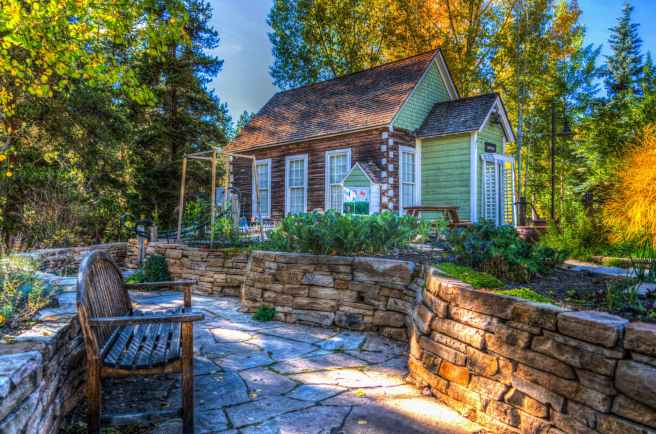
Entrance into any space is often an anticipation of things to come, whenever you go anywhere for the first time, the first thing that leaves a lasting impression on you is the environment and the atmosphere of that particular place. The vibe, the energy and the general feeling of the place can impact your mood straight away. Your physical environment can have a direct impact on your psychological well-being and mental health. Your environment plays a vital role in your overall health.
Physical environment and mental health:
According to the research, the built environment has direct and indirect effects on mental health. People who live in crowded areas and sub-standard quality accommodation and with minimum or no contact with nature are known to suffer from psychological distress more often than people who live in natural and open areas. Various studies also show that Alzheimer’s patients have lower levels of stimulation when they live in open, green and homelier spaces. Other environmental factors such as various air pollutants, toxins, bad/insufficient lighting, loud noises, harmful chemical, radiation, infectious agents, all could elevate our psychological distress leading to mental health problems. Psychosocial factors of the built environment such as having no control over your immediate environment (slum dwellers), lack of socially supportive relationships or lack of proper space to recover from stress and fatigue, could all lead to anxiety, depression and many such other mental health issues.
A modern day scenario of our physical environment:
In today’s world we usually do not have much control over our physical environment. We are a moving population, always on the go. We are crossing continents in search of better life and future, always on the lookout for better opportunities. We are constantly staring into our screens of various shapes and sizes, we eat fast food and gobble down food of no nutritious value and we are struggling with lack of restorative sleep and relaxation time. Our eyes are strained with bright lights and hyper-stimulation. Amongst all this fast paced movement, we hardly notice our physical environment. Who is sitting beside us on the plane, train or bus; in a fast food joint, on even on that park bench whilst we are busy always ‘doing’ something on our electronic devices. We totally disregard our immediate physical environment and live in this virtual world. Gone are those days when we used to know the entire street or the village. We used to have that sense of belonging, when we knew every single tree and nook and corner of our little village. When you knew there would always be a group of wise old gentlemen sitting at the roundabout, under the big shady tree in your village, looking at the world go by, reminiscing and just living in the moment being mindful, cherishing each other’s company, enjoying their surroundings, and taking pride in their village.
In today’s world of humongous teeming metropolises, we don’t even know who our neighbour is, or what the demographics of our street is. We go to work early in the morning, come back home in the dark, just to eat and sleep and then go again into the rat race. No wonder, there is such a spike in people looking for some meaning in their meaningless lives and Marie Kondo, The Minimalists, Hygge etc are gaining popularity, giving tips to people on how to take a break from it all and create a little bit of paradise for themselves to keep sane and to feel happy.
Happiness is such a broad term which is also related to our physical built in environment directly or indirectly. It lifts your mood, impacts your behaviour and motivation positively, reduces anxiety and stress, and increases your sense of general well-being. Big companies are also trying to work on their physical environment so that the productivity of their employees increase manifolds and the creativity factor is positively influenced and the majority of their employees can tick that ‘Happiness’ box.
How to create a happy, positive environment:
We all must have experienced that feeling “I am home” and what it feels like to come home to a clean, welcoming, cozy, warm home at the end of a busy day. You look forward to reaching home, to your familiar space and to your familiar surroundings. No one to bother you, no deadlines, no harsh glare of the screens, no noises.
The Danes are known to be one of the happiest people in the world and the secret to their happiness is embracing ‘Hygge’. It is the Danish way of living life – meaningfully, mindfully, cosily, warmly and happily. Hygge is an oasis, a refuge from our daily struggles of fatigue, disconnection from real world and real people, mental and physical connection exhaustion, and this ever present sense of being totally lost in this modern wilderness. Hygge is all about peace, simplicity and comfort. It is about being authentic, it is about being real and it is about being at peace with everything around you, your surroundings and your atmosphere.
How would you define Hygge? It is a philosophy which encapsulates simplicity, togetherness, familiarity, safety, peacefulness, contentment and warmth. How could we practice Hygge in our daily lives? The first and foremost is about establishing meaning connections with everything and everyone around us, with loving kindness. We need to be mindful of our immediate environment and try to live and enjoy each moment to its full potential. We need to realise that we all are vulnerable and are connected to each other in some way or the other. We all are a part of this universe.
We can do small things to start practicing hygge in our daily lives, such as having a family meal together, when everyone is actually present and enjoying each other’s company, sharing stories and actively turning off all electronic intrusions. Hygge is about creating an atmosphere and a feeling of warmth, safety, comfort and coziness, where no one is competing against each other. Creating an atmosphere with soft lighting, blocking out all the harshness and loudness from your home, lighting up candles. They will create little sanctuaries around your home of softness and warmth to comfort your tired souls and eyes. You can apply Hygge in all spheres of your life – it feeds your soul and warns the innermost corners of your heart.
Try this at home:
• at the entrance of your castle, place a little pot with some aromatic flowers
• declutter as much as possible, only keep those things that spark joy (as Ms Kondo would say)
• introduce some greenery around
• add more flowers, even a single flower could change the whole atmosphere
• light up more candles
• become a pet owner
• put some old favourite family photographs around
• have plenty of cozy blankets, rugs, throws and cushions
• create a cozy nook called ‘Hyggekrog’
• paint your home with soothing colours
The list is long and it depends on everyone’s personal preference, you can apply the same principles to your work environment too, making it less formal and more authentic and comfortable rather than stark and too formal. These days, even hospitals are trying to incorporate these principles into their physical environments. Happy and cheerful colours in the hospitals and wellness centres can contribute towards patients’ quick recovery rather than the stark, clinical and more structured, formal décor/atmosphere. So, create an environment physically which will enrich you spiritually, emotionally and mentally. Listen to you heart, surround yourself with all things nice and soul satisfying. Go deeper, be authentic and be yourself and above all be mindful of your surroundings. Enjoy the moment, soak it all in and listen to the song that your heart is singing….it is happy, content and at peace!
Be nice to yourself, slow down and always, always, always listen to your heart…..home is where the heart is!
 vibhadassingh